
Bobref
-
Posts
7,846 -
Joined
-
Last visited
-
Days Won
345
Content Type
Profiles
Forums
Gallery
Store
Articles
Events
Everything posted by Bobref
-
It could also mean that the ball crossed the sideline at the 2 while the player was airborne, and that he first returned to the ground out of bounds.
-
Some part of the ball would have to pass over some part of the pylon before he touched down out of bounds for it to be a score. Keep in mind that this was a 20 yd. run or so. There's no way the Head Linesman could get to the pylon to get a close look at this play. One of the problems of 5 man crews.
-
Neither did the Head Linesman. 🤣
-
Lutheran answers. 14-7 5:03 of the 1st. Going to get a lot of chances to review this crew's free kick mechanics, looks like.
-
An airborne ball carrier must have the ball inside any part of the pylon when it crosses. A runner must cross inside the pylon, even if the ball is outside the pylon. The pylon is considered out of bounds in the end zone. So if you touch the pylon, you've broken the plane of the goal line.
-
59 yd. punt return. Adams Central 14 - 0. 6:42 1st period
-
A still photo is not convincing.
-
Adams Central wastes no time driving with the opening kickoff for a TD. 7-0 10:12 1st period.
-
Sitting in the pressbox, so I thought I'd get this started. Post your observations here. My first observation: Lutheran only has about 40 players dressed.
-
Somebody woke up on the wrong side of the bed this morning. Problem is, Muda, if you let the kid make a mistake, the Coach is going to end up blaming you anyway. I speak from personal experience.
-
I’ve had some very interesting things happen at the coin toss, but not that one. Nowadays, we simply don’t let them make a mistake. We ask the coach ahead of time what the choices are, and if the captain says something different, you can have a little fun with him. “Bzzzzzz… Wrong answer, but thanks for playing.” You can thank Jerome Bettis and Phil Luckett for that.
-
Which programs do the most with less
Bobref replied to BTF's topic in The Indiana High School Football Forum
Pioneer enrollment 283 Chesterton enrollment 2,063 August 28, 2020 Pioneer 20 Chesterton 16 -
Which programs do the most with less
Bobref replied to BTF's topic in The Indiana High School Football Forum
Agent provocateur -
You have only to look at how this is being handled to see how dysfunctional the organization is from top to bottom. If we can’t get the McCaskeys to just take their $4 billion and go away, then an organizational housecleaning is in order. Pace and Nagy need to go, and I wouldn’t shed any tears if Ted Phillips was carrying their bags.
-
Trick play from a football game in 1932
Bobref replied to Muda69's topic in The Indiana High School Football Forum
They put the “special” in special teams. -
You just know they are going to lose Bedlam.
-
Interestingly enough, Sagarin has the Irish currently about a 3 pt. favorite vs. the Bearcats on a neutral field.
-
OK, now you’ve got to come across with the details.
-
State Championship Games Are Set.
Bobref replied to Indiana Preps's topic in The Indiana High School Football Forum
I’m ready for the traditional post-Thanksgiving orgy of high school football. I’ll have some observer responsibilities from time to time. But I’ll also have some free time, and would love to put some faces with GID screen names.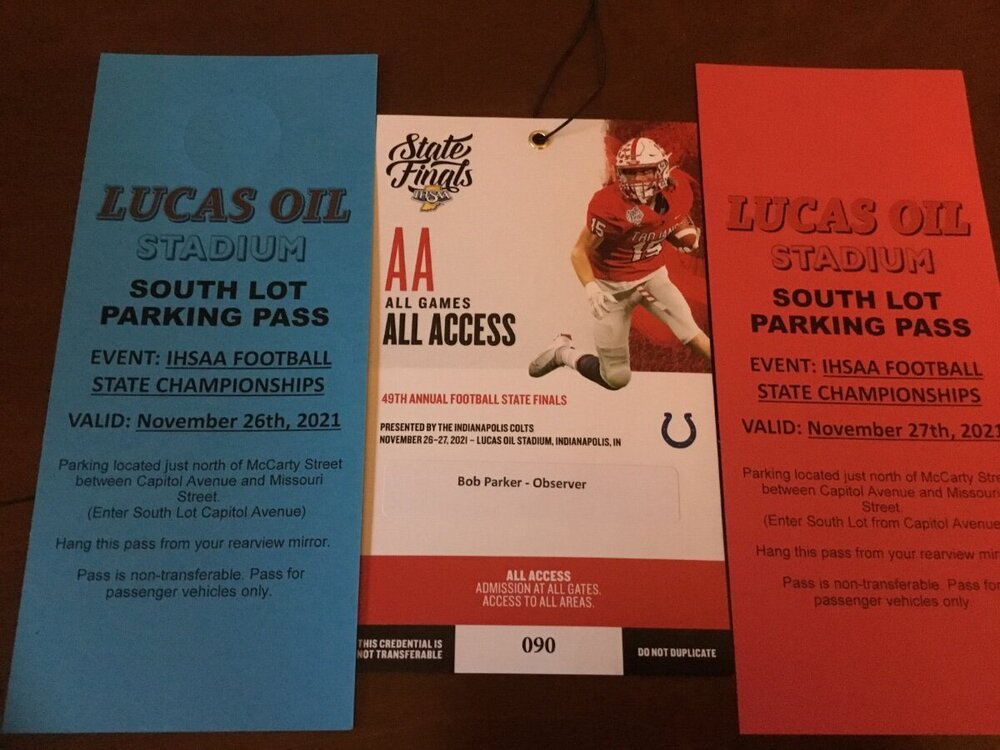
-
You've piqued my curiosity.
-
I ask not just because it is a Region crew, but because my brother is the Head Linesman on that crew, the official on the visitor's sideline. Glad to hear they looked good.
-
How Are Officials Selected For, And Advanced Through, The Tournament?
Bobref replied to Bobref's question in Officiating Forum
Skipping ahead to #4 on the list (because I haven't finished #3 yet) of significant flaws in the coaches' vote system: 4. Coaches are not required to rate every crew they see during the period under review, introducing selection bias to the process. The guidelines sent to coaches by the IHSAA instruct them to rate the crews they have seen in the last 3 seasons, plus the portion of the current season. The purpose of this limitation is to insure that the coaches’ vote reflects, as closely as practicable, the current level of proficiency of each crew. However, this method of gathering information on crews is flawed by the absence of a requirement that each coach rate each crew he has seen. While the IHSAA can impose a monetary fine if a school does not turn in a coaches’ vote ballot, or even bar them from the tournament, a coach is free to turn in a ballot that rates fewer – sometimes substantially fewer – than all the crews he has seen over the period. This introduces a selection bias into the sampling process, invalidating the results of the coaches’ vote, if what we are seeking is a true, statistically valid, representation of the relative proficiency of the crews applying for the tournament. For years, when officials pointed out to the IHSAA this error in the methodology used, the standard response was “Don’t be concerned. If a school did not cast a vote for your crew, most likely the vote would have been a bad one. So, you benefited from the school not voting.” I have never seen any evidence to support that supposition. But more importantly, it fails to recognize the zero sum aspect of the playoff selection and advancement process. Because there are a finite number of games in the playoffs, and more crews applying for the playoffs than are needed to staff all the games, any advancement by one crew is at the expense of another. If there are crews that should be receiving poor votes, but they don’t out of some misguided notion by a coach that he is doing the crew a favor by not casting that vote, it comes at the expense of another crew that should, all things being equal, be rated higher. But they are not rated higher because other crews who would be rated lower if those misguided coaches had actually voted are taking the places ahead of them in the rankings. To the extent the coaches’ vote process is intended to accurately reflect coaches’ opinions of crews, the process is flawed by selection bias resulting from the failure of the process to require coaches to rate every crew they are eligible to rate. It would be great to hear from some coaches as to how they go about filling out their coaches' vote ballot. As always, if you would like to respond in confidence, just pm me and I'll use your response without attribution. Next: #3: Coaches are not given clear enough standards, and the standards they are given promote inconsistency and do not correlate to officiating excellence. -
How did the crew look?
-
Question: 11/21 Colts/Bills Game (Professional)
Bobref replied to Yuccaguy's question in Officiating Forum
I didn’t see the game. But that’s the rule. -
Question: 11/21 Colts/Bills Game (Professional)
Bobref replied to Yuccaguy's question in Officiating Forum
It must have been in the last 2 minutes of the half or the game. In the last 2 minutes, only the fumbler may recover and advance. Any other player of the recovering team gets it, the ball is dead.