
Bobref
-
Posts
7,846 -
Joined
-
Last visited
-
Days Won
345
Content Type
Profiles
Forums
Gallery
Store
Articles
Events
Everything posted by Bobref
-
Lots of practice from those DUI stops? 😂🤣
-
Andrean's Drayk Bowen
Bobref replied to Boilernation's topic in The Indiana High School Football Forum
Don’t jinx us !!!!!! -
Andrean's Drayk Bowen
Bobref replied to Boilernation's topic in The Indiana High School Football Forum
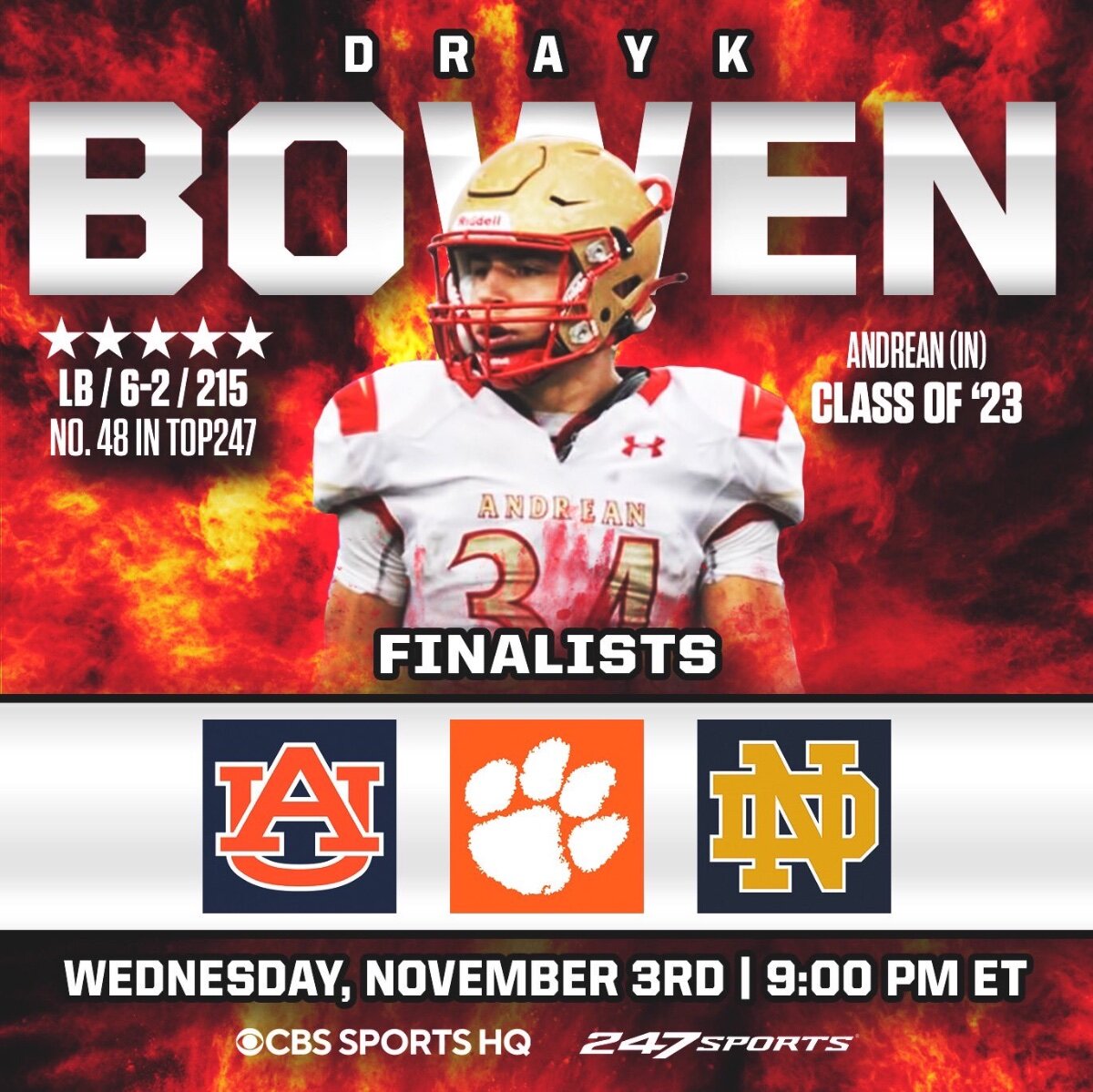
This would be a huge get for the Irish. 🤞🤞🤞
-
The idea is to make the sites as neutral as possible … now. But if a team earns a home game in a seeded playoff, the site is no longer “neutral.” Now … as for live mascots …
-
I wonder if the sectionals were seeded, and the higher seeded team had earned home field advantage, would these rules go away?
-
That is an NFL rule. In high school, the important thing to remember is that the passer is, by definition, a “defenseless player.” We don’t go quite to the same lengths as the pros, so if you “brush” the QB’s helmet it’s not a foul. But any forcible contact above the shoulders is going to draw a flag. I’ve also heard people talk about the “two-step rule,” but it’s more of a guideline. When I was wearing the white hat, like most referees I would call out “ball’s gone!” when the pass is away. Any contact after that was considered late.
-
So now you’re piling on, too?
-
Honestly, Muda. I wish you could attend this game. I think even a hard-boiled cynic like you would be moved by the sight of these 2 teams knocking the crap out of one another for 3-1/2 hrs. … and then 200 fine young men joining in a group to first sing the Navy anthem and then the Notre Dame alma mater, to the respective fan sections, while the band plays. It is really something. Probably won’t make Sports Center. But it is really something to see.
-
Therein is the problem You regard it as merely a football game. If you had ever been there to see it, you’d realize it is much more than that.
-
Romance in a broader sense. And it’s a graduate level course. 🤣
-
Get a little romance in your life. You’ll be the better for it. He starts at Rover, and has all season.
-
Offsides with no flag and after a two minute discussion
Bobref replied to gbjemler's question in Officiating Forum
I wish I could. But without video … A very good official once told me that it’s better to look bad and get the call right, as opposed to looking good, and getting it wrong. The lack of a flag is perplexing. -
You could look at it that way … if you were a twisted horse’s a$$.
-
More’s the pity.
-
You have no idea.
-
Don’t know, but I’ll be there. I love this rivalry. I’ve created a separate Topic in the Next Level just for this game.
-
Yes, but if you read the entire report - as I did - you’d be aware that the decision to send video up on the platform was not Kelly’s.
-
Exactly correct.
-
A prickly pear is a cactus, not a pear.🤣
-
This coming Saturday, Notre Dame will host Navy in the renewal of an intersectional rivalry that was played continuously since 1927, except for last year due to COVID. And every year people ask “ Why does ND still play Navy in this era of playoff football where quality wins can be gold?” The answer is both simple and complex. The short answer is that the University owes the Navy an honor debt that can never be repaid. It dates back to WW II, and is explained here. https://www.underdogdynasty.com/2021/6/30/22557150/why-the-navy-notre-dame-game-matters-midshipmen-irish-mids-ken-niumatalolo-college-football At Notre Dame, there are some things more important than wins and losses, more important than playoff qualifying, more important even than national championships. Notre Dame will play Navy as long as Navy wants to play Notre Dame. That is absolutely written in stone for reasons that have nothing to do with rankings, bowl games, or championships. I will be in the house Saturday, as I have been for many of these over the years. I intentionally got tickets in the south end zone, as close to the Navy section as possible. Their people are just outstanding. And if you’ve never seen what happens at the conclusion of the Notre Dame - Navy game, well, all I can say is there is no scene like it anywhere else in college football. I love big time football, the big Bowl games, the playoffs, etc. But for me, this game is the pinnacle, because it represents the pure spirit of college football. Go Irish! Beat Navy! … and then honor them as they deserve.
-
Brian Kelly had the personality of a prickly pear for a long time. The administration — and I don’t mean the athletic administration — sat him down and told him he was representing the University poorly, and that was not going to continue regardless of his won-loss record. He has changed dramatically. You want to bring up the Declan Sullivan tragedy that occurred as a result of multiple factors 11 years ago as proof of something, you’ve merely revealed yourself as just another mindless hater.
-
Halftime, no. All game balls are approved before the start of the contest. But in the case of really inclement weather, some leeway in that is fine. And there is no limit on the number of footballs that can be used. How many ball boys do you have? 🤣
-
I think you’re exactly right. Hamilton is one of the 5 best players in college football right now and the undisputed leader of the defense. It would be nice to have someone step up. But he’s irreplaceable.
-
If the defense has 12 in the formation, we’d hope that the back judge would catch that pre-snap and flag a dead ball illegal substitution, which is only 5 yds. Sometimes, especially on a punt when the back judge is 50 yds. from the LOS, it can be very difficult to get the count, then re-count if there’s 12, and get the play shut down before the snap.
-
I have not observed any change in calling this foul at any level. The rule itself has not changed. It’s not a Point of Emphasis. I don’t see it called any more often, as compared to past years. But keep in mind that the rules are different at each level. In the NFL, for example, any contact above the neck is a foul. Contact below the knee is also a foul. At the high school level, we don’t have that.