
Leaderboard




Popular Content
Showing content with the highest reputation on 12/02/2023 in all areas
-
Why is it so hard to accept that private school families are just better than public school people?3 points
-
He said it in front of an IU crowd at Assembly Hall. What’s he supposed to say? We’re going 3-9 next year. Too many people looking way too far into this.2 points
-
I was at a loss for words when it was suggested that he said that. I assumed maybe he said that to the media, which would have been bad. I don't see anything wrong with saying something like that to rev up the student body. Great hire in my opinion. Reminds me of Brian Kelly how he's done well at every stop. Learning from Saban helps just a little too. He sounds like he knows what he's doing, not just a rah rah guy.2 points
-
If you want to see Elliott, can see on ESPN tonight at Idaho in FCS playoffs.2 points
-
This all much appreciated and great to read about. Thanks Tippy!2 points
-
The only concern that I see in this is that, indirectly, there's a negative connotation that kids with special needs are "dead weight" burdens at their schools. That's likely to bring some type of cause of action activity which, as we've identified numerous times here on GID, is something the IHSAA wants to avoid like the plague. With that said, I have to imagine that, in addition to all of those other stats that the schools and state tracks like race, language, FRL status, ISTEP scores, college placement, etc. there is most likely a participation stat. That is, what percentage of the student body is involved in one or more extracurricular activity tied directly to the school. That percentage could then be used to determine the "activity classification" or "activity enrollment" of a school. This number would/could incorporate special needs kids, but would not directly target/reflect them. In addition, for kids classified with a disability or special needs who were active, e.g., the one-armed kicker that you mentioned, would not automatically/erroneously be omitted from the active count. This would address the potential issue that the IHSAA would wish to avoid, would provide a more accurate count rather than just generally categorizing, and would also allow for several factors to be considered. In addition, it is applied to all schools equally regardless of p/p, public, charter, etc. classification. The main problem is that it would likely be a school-reported figure, so it would be be potentially subject to finagling, but it might be a small enough finagling number/impact that it wouldn't matter. The only other issue, tied to finagling, would be outright reduction in offerings for students with disabilities ... or other groups. In order to keep its activity count low, a school could decide to reduce offerings like unified flag football or unified track and field. Similarly, schools might reduce smaller activities where only single-activity students are involved like chess club to gain advantage in the "activity enrollment" impact. One way to combat this, or actually provide incentive to embrace activities like unified sports, might be to offer a "bonus" reduction for having these programs. Instead of a school's mindset that it would be a hit to the activity enrollment to have these programs, it would not only be beneficial to the students to offer them, but also to the school to have these.2 points
-
You’ve always pointed out that there are special needs kids who simply aren’t going to participate in varsity level sports via some form of handicap (physical or otherwise….though I can actually recall a quite good one armed kicker for Batesville back in my day), severe learning disability, etc. (I admit questioning whether ELL might be somehow considered disqualifying). I’ve always been in favor of not counting them towards student population as regards IHSAA class designations. Is there some reason it is impractical or illegal to do so? That strikes me as a, frankly, uncontroversial (and sensible) change the IHSAA could institute tomorrow. In a certain sense, it acts as a “negative multiplier” for Publics based on a very precise calculation. I realize it’s not a multiplier or automatic bump that some want but incorporating this into the IHSAA class determination calculation might go a heckuva long way towards making a reasonable adjustment EVERYBODY can get behind. What am I missing here? You’ve pointed this out for years. It seems totally reasonable and sensible (at least, I’ve always thought so) but just why hasn’t it gotten any traction?2 points
-
Central Catholic Broke the Law on Friday November 3, 1989. The Knights shutdown Brett Law (Indiana's leading rusher) and beat Sheridan for the Sectional Championship 17-7. LCC's first sectional Championship since 1976. Sheridan was ranked #1 in Class A at the time. LCC went 4-4 during the regular season. LCC 0-10-7-0 Sheridan 7-0-0-0 Sheridan scored on their first possession of the game. LCC blocked a punt with 4:39 left in the first half and Scott Ebershoff picked the ball up and scored to tie the game at 7. Knights QB Craig Ebershoff was taken to the hospital with a shoulder injury in the 3rd Q and Ed Bogan took over for the rest of the game.2 points
-
The biggest inequity before 1983 was that an unbeaten team could miss the playoffs because of the format for selecting district champions. It was based on a point system with more points awarded for beating schools in higher enrollment classes. Under the Cluster System, each school was required to play every school in its cluster- and only those games would count toward qualifying for the playoffs. Thus if a team beat every opponent in its cluster, it automatically got into the playoffs. You could go 4-6 and still get in the playoffs. LCC didn't have to worry about the Cluster System because they didn't beat anybody in 1983 and 1984.1 point
-
LCC was readmitted to the Hoosier conference in 1980 after a 4-year stint as an independent. One of the criteria the conference set for LCC being readmitted to the conference was that it change its football status from Class A to Class AA. LCC applied to the IHSAA for the change in status, but it was learned early in October 1980 that LCC was still on record as being a Class A School. The IHSAA allowed a status change only in odd-numbered years, thus LCC's opponents in 1980 received 1 playoff point for a victory over the Knights instead of 2 had the Knights been a Class AA school. It was the Conference's opinion that LCC made a legitimate mistake, and they understood.1 point
-
1. Michigan 2. Washington 3. Texas 4. Alabama1 point
-
AAU also seemed to be an issue of concern1 point
-
yep...he was given the pa mic after he was introduced at the IU Maryland BBall game last night. Not really a fan of it, but still not as bad as Brian Kelly's fake Southern accent 😄1 point
-
Ben Franklin1 point
-
Painter has always stated that these rankings that are industry standards are bogus because there are WAY too many grassroots teams, players, events that you CANNOT in any certainty scour the entire pool and create any sort of system that is valid.1 point
-
regency bias at is finest Wash struggles in Rival game, Oregon "trending up" was the narrative.... LINES are established because hedging public money flowing in. Public is Dumb 95% of the time1 point
-
Washingon as a 10 point underdog made me with I was still a gambler. Man. What a crazy line.1 point
-
This is why I think using a general inactivity measure as opposed to categorization would work well. The REASON for inactivity wouldn't matter. A kid in a wheelchair that has to use eye motion to move the chair and technology to speak counts the same as a kid who works the family farm instead of extra-curriculars because his dad died of a heart attack at 40 and left his mom to raise him and his three younger siblings who counts the same as a kid that just wants to go to school, do his time between 7:30 - 3:00, and then go home and read manga. In essence, the state/IHSAA doesn't have to delve into the reasons, and frankly it shouldn't make a difference to them anyway for sports-related reasons, and so it protects the privacy of the kids/families and respects the dignity of the kids in not having to "tell" or "defend" their position. As for the age, I think the IHSAA already has an issue for age, in terms of participation, so the adjustment to the "activity count" would be to subtract out someone who is ineligible by age for IHSAA participation even if they are active in some other activity. For example, a 22-year old involved in the chess club would be ineligible for IHSAA participation in sports, so that school's activity enrollment would be decreased by one.1 point
-
Well stated. My thoughts exactly, but more than likely, you stated them much better than I likely would have.1 point
-
Hilarious comment from a Michigan fan. Hopefully, he will run a clean program, resist cheating, represent his university with integrity, demonstrate the highest levels of integrity and fair play to his players and stay on the field avoiding suspensions for being a cheating hack. He may well be at IU longer than Jimmy boy at the land of Walmart Wolverines.1 point
-
Yes, our consultants recommend not providing financial enticements until the student-athletes reach 7th grade.1 point
-
Oh I definitely understood your post and wasn't dismissing it.1 point
-
The point to my post really is about who actually is available in each building. With the lack of students in the areas I mentioned, the reality is that non public schools have a number available/able to participate that is more on par with schools that are a class or two above where their enrollment places them in the current system. And there are too many people who simply refuse to consider that, or they just discount the impact of differences in population.1 point
-
Does Roncalli still have their STARS program for Special Education Services? I know Cathedral offers language support programs, but that is not special needs. I don't think Brebeuf has any special needs. I know both schools do not discriminate against disabilities and have had disabled students, but that is different tan special needs. I definitely respect your knowledge of it because unlike others I know you have taught in both Public and P/P.1 point
-
But do non public schools have special needs students? It isn't only about kids with other interests. It's about the kids who are not able to participate because of various disabilities. There is also the population that is interested in nothing. Our building in particular has over 200 ELL kids, and more than 12% of our students are non diploma track kids. Yet we are in 4A.........implying that just based on numbers, we are identical to Bishop Dwenger. Want to know what the numbers above look like in their building? About 1% and all of their kids are diploma track kids. Others? and the ELL kids that Catholic Charities helped bring here as refugees? Non existent.1 point
-
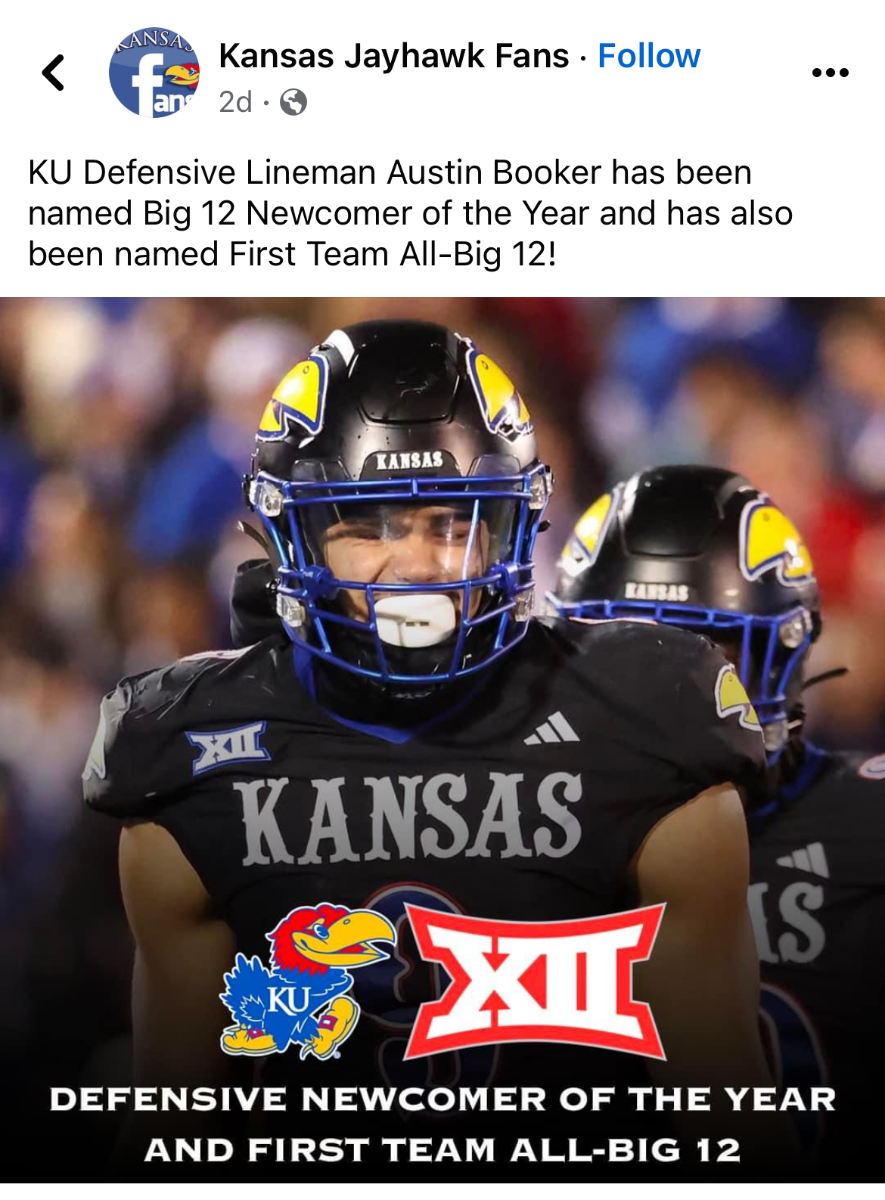
Former Center Grove standout DE earns Big 12 First Team honors!! Way to go Austin!!
 1 point
 -
1 point
-
We scored touchdowns on two consecutive kickoffs which were fumbled... The last score was by a freshman fullback, Charlie McKee.1 point
-
Who ranks the Rankers?1 point











This leaderboard is set to Indiana - Indianapolis/GMT-04:00